
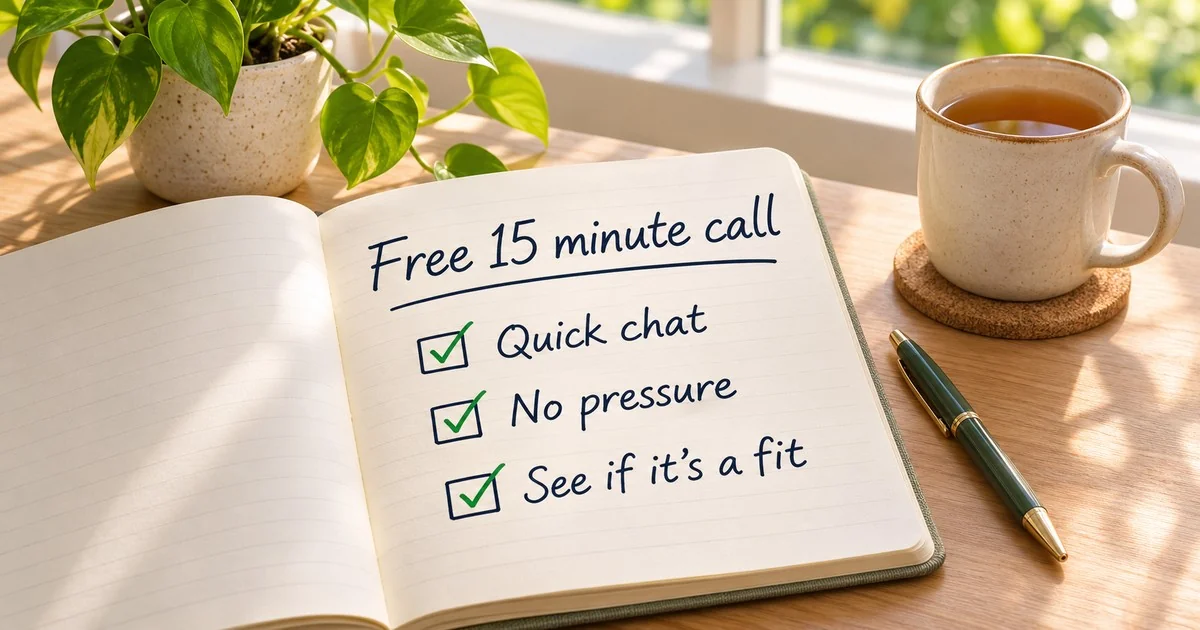
“Free initial consultation available.” Four words, often tucked at the bottom of a page, and they leave the reader with more questions than answers. How long is it? Who rings whom? Is it a sales pitch? Will I have to explain everything to a stranger on the phone?
For someone who has been putting off getting in touch for weeks, a short call can be the easiest first step there is. But only if they know what they are agreeing to. When the wording is vague, the call starts to sound like a commitment, and the tab gets closed.
Here is how to describe your initial call in plain words, with lines you can adapt.
Settle the details before you write
You cannot describe a call clearly until you have decided how it works. Jot down your answers:
- How long is it? 15 minutes, 20, 30?
- Phone, video, or the person’s choice?
- Who calls whom, and how is it booked?
- Is it free? If not, what does it cost?
- What happens at the end?
Once you know, the wording almost writes itself.
Six things to say, with wording you can adapt
1. What the call is for
One sentence is enough: “A free 15-minute phone call so you can ask questions and get a feel for whether we might work well together.”
2. That it is not a session
Many people worry they will have to tell their whole story straight away. Say clearly that they will not: “This isn’t a therapy session, so you don’t need to go into detail about what’s been happening. A sentence or two is plenty.”
3. How it happens
“I’ll ring you at the time we agree” or “We’ll speak on Zoom and I’ll email you the link the day before.” If your number shows as withheld, say so, because plenty of people don’t answer calls they don’t recognise.
4. How to book it
Give one clear route. A link to your contact form, a booking calendar, or “Email me with two or three times that suit you”. Nobody should have to hunt across three pages to find it.
5. What happens next
“If we both feel it’s a good fit, we can book a first session. If not, that’s absolutely fine, and I can suggest other places to look.” That one line takes away the fear of being talked into something.
6. That there is no obligation
Say it in everyday words: “There’s no obligation to book anything afterwards.” Skip “no-obligation consultation”, which sounds more like a conservatory quote than a conversation with a therapist.
Where to put it
- On your contact page, right beside the form or booking link.
- On your fees page, so people see the free option next to your prices.
- In your first-session section, as the step that comes before.
- On your main homepage button: “Book a free 15-minute call” tells people far more than “Get in touch”.
Use the same length and wording everywhere. If your homepage says 15 minutes and your contact page says 20, people notice, and it makes them wonder what else is out of date.
Wording that gets in the way
“Free consultation.” It sounds clinical and formal. “Call” or “chat” is closer to what actually happens.
“Discovery call.” Common in coaching, but it can feel salesy to someone looking for a therapist.
“Limited spaces, book now!” Pressure is the last thing a nervous visitor needs.
Conditions hidden in the small print. If the call is only for new clients, or only for individual work and not couples, say so up front.
If you don’t offer a free call
That is a perfectly good choice. Some therapists prefer to answer questions by email, or to go straight to a first session. Just say what happens instead, so nobody is left guessing: “I don’t offer an initial call, but I’m happy to answer questions by email before you book.”
A paragraph you can borrow
“Not sure yet? Book a free 15-minute phone call. It isn’t a therapy session, so you won’t need to go into detail. It’s a chance to ask about how I work, my fees and my availability, and to see whether we might be a good fit. I’ll ring you at the time we agree, and there’s no obligation to book anything afterwards.”
Swap in your own length, method and booking route, then read it aloud once. If it sounds like you talking, it is ready.
Make the change this week
Find every place your site mentions a consultation or call, and bring the wording into line using the six points above. On our websites you can update your content yourself at any time, with UK-based support when you want it.
We like a conversation before we start, too. As one client wrote on our reviews page: “Great to be able to speak to someone who is then able to interpret the ideas and put it into a website.”
If your current site makes small wording changes like this a chore, tell us how you work and we can talk through a new or rebuilt website for your practice.